
Physical AI and Robotics in India: Which Industry Would Scale First?
Contents
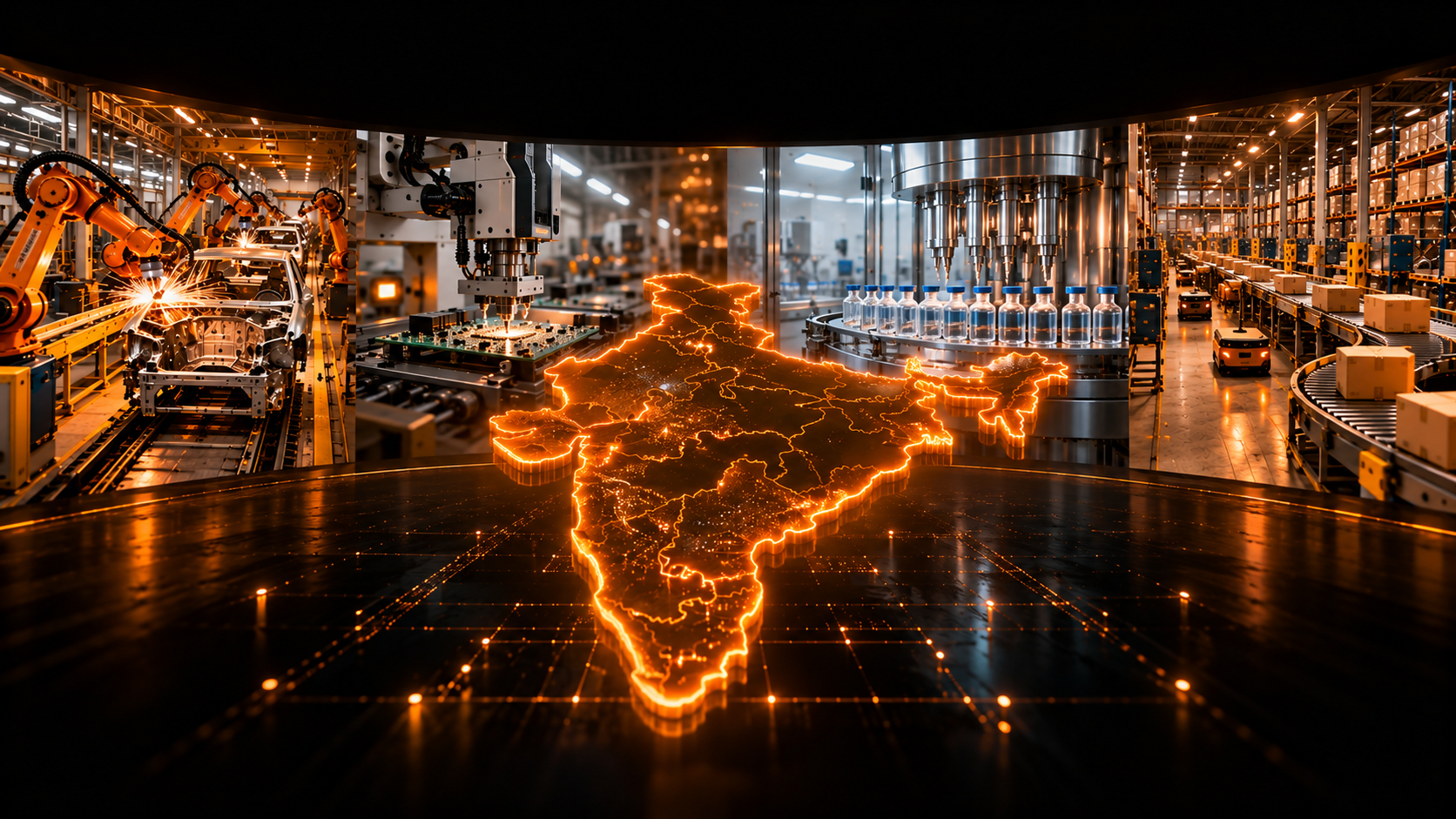
In 2025, India installed roughly 10,500 industrial robots and during that same period, China installed 3,54,000.
The immediate reaction to that comparison is predictable: “India is too cheap for automation. Why sink capital expenditure into six-axis arms when flexible manual labor is readily available across industrial corridors from Pune to Sriperumbudur?”
That logic fundamentally misunderstands how robotics adoption scales in developing economies. Automation does not scale by replacing cheap labor, but it scales where human variability is an unacceptable operational risk.
Where we actually stand
Despite this gap with China, India is quietly the sixth largest industrial robot market globally, compounding at an average of 27% annually since 2020. The installations are accelerating because our industrial base is undergoing a dual shift – aggressive localization through Production Linked Incentives (PLI) and an aggressive push to meet global export tolerances. When capital expenditure, regulatory compliance, and export quality converge, the sequence of which sectors adopt robotics and Physical AI first becomes predictable.
As Physical AI gains momentum globally, attention is shifting towards machines that can perceive, reason about, and interact with the physical world. But in India, the more immediate question is where robotics can deliver measurable business value, and which industries are best positioned to adopt it at scale.
My bet is on manufacturing, led by automotive, electronics, and precision engineering. Pharmaceuticals could follow, with logistics and warehousing close behind.
The sequence, and why it runs in this order
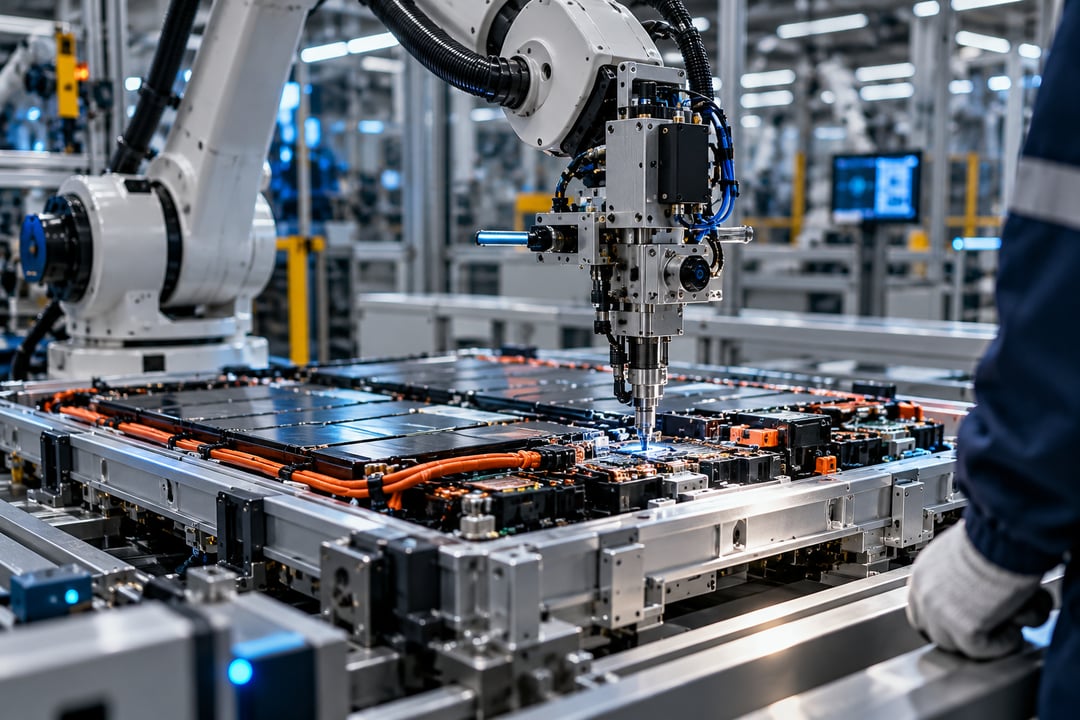
1. Manufacturing moves first. Automotive OEMs and their Tier-1 suppliers are the largest single customer base for industrial robots in India (45% of national installations), and EV assembly in particular does not tolerate variability on thermal paste application or spot welding.
2. Electronics and precision engineering follow close behind, pushed by the aforementioned PLI incentives and assembly localization. Consumer hardware lines need micro-placement repeatability that a human hand cannot sustain across an eight-hour shift. In electronics, robots aren’t a labor arbitrage play, they’re a yield optimization play, and that distinction matters because it changes who approves the capex.
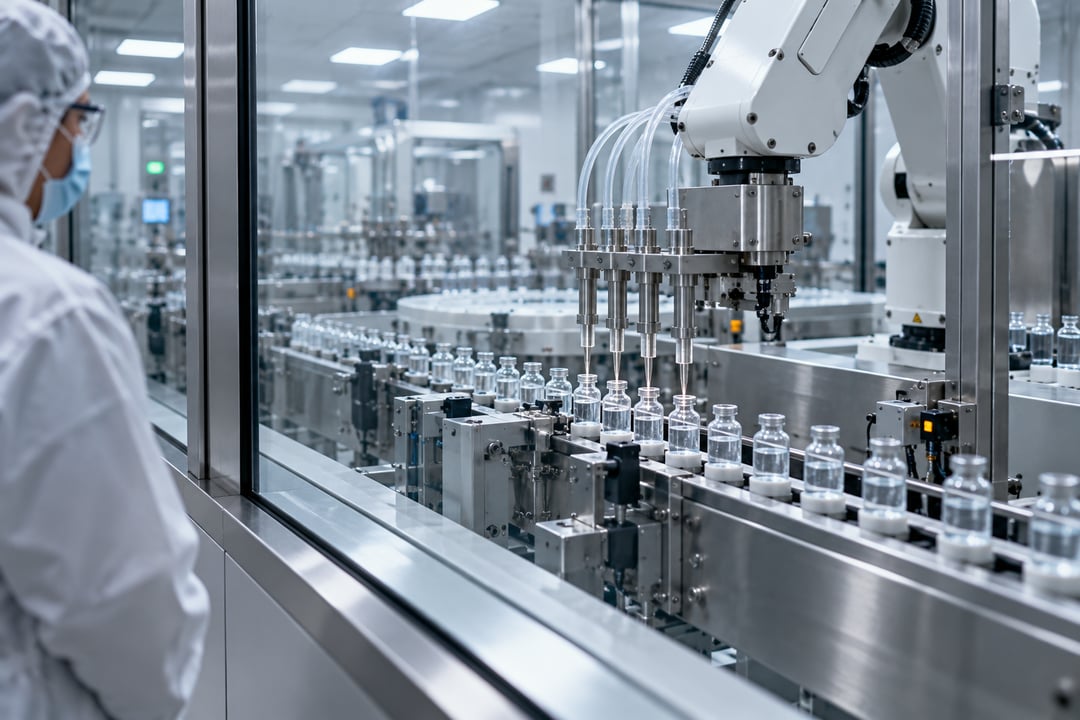
3. Pharmaceuticals come third, and the driver here is different from the first two. It isn’t speed or cost, but compliance. Regulators already demand what robots are naturally good at: documented, repeatable, auditable processes. A sterile fill-finish line with a human in it isn’t a labor cost anymore. It’s a contamination risk sitting on an audit report. This reframing, from labor to liability, is why pharma moves ahead of sectors with more venture capital attention.
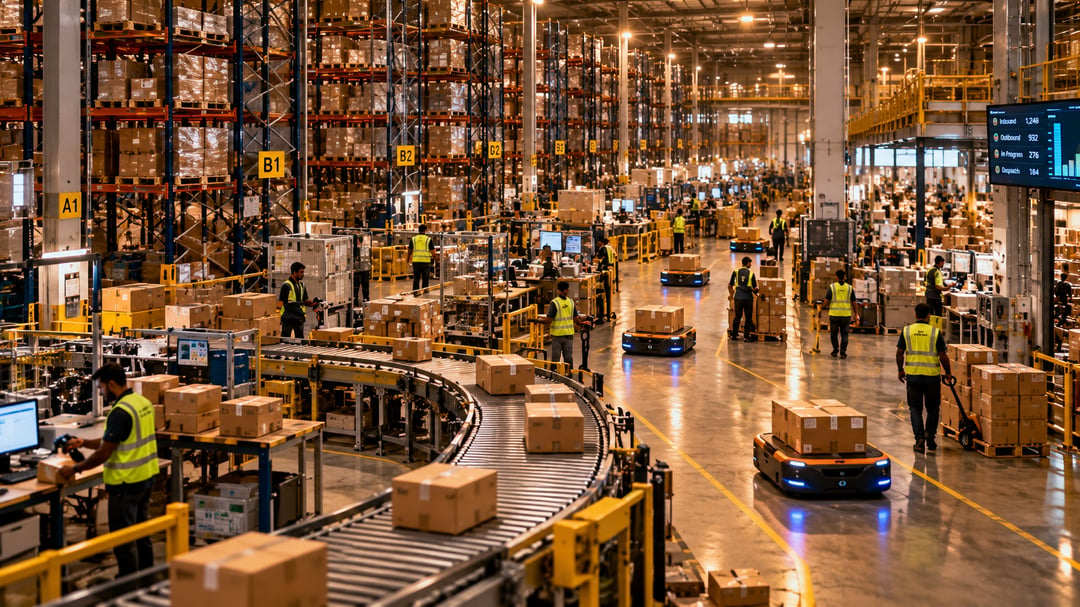
Supply chain and warehousing trail, despite being the sector everyone wants to talk about. Automated sorting and AMR fleets work well in greenfield hubs built outside Tier-1 metros. But most of India’s distribution network is brownfield and fragmented, and in that setting, flexible manual labor is still cheaper and faster to redeploy than a fixed robotic system. The unit economics simply aren’t there yet outside the largest 3PL and e-commerce operators.
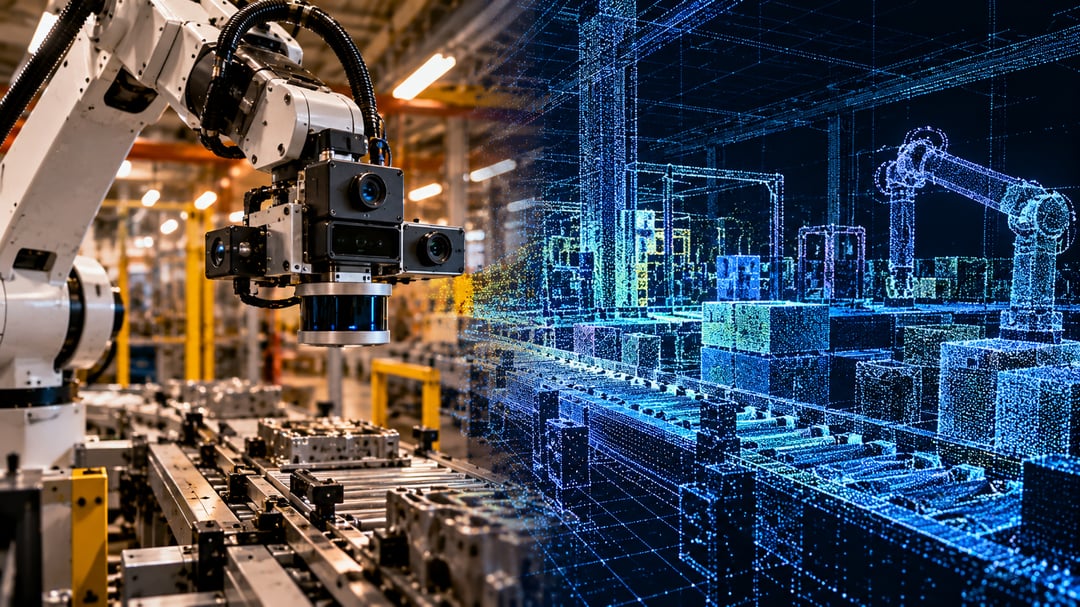
The bigger shift is from fixed automation to Physical AI
It’s worth separating two things that are getting collapsed into one conversation right now: deploying conventional industrial robots, and adopting Physical AI.
What I have described so far, welding arms, pick-and-place systems, sorting robots, is largely fixed automation. It’s valuable, scaling, and real, but it’s not Physical AI in the fuller sense. The bigger shift happens when a machine can perceive its environment, adapt to conditions it wasn’t explicitly programmed for, and act outside a tightly scripted sequence. Perhaps a robot which can handle a part 2mm off spec without a line stoppage, or a system which notices a new defect pattern instead of only catching the ones it was trained on.
This shift depends on more than simply better hardware. It needs better training data, simulation environments which model edge cases cheaply, and integration layers which let perception systems talk to legacy plant infrastructure. This is also where the AI side of Physical AI starts to look a lot like the AI side of any frontier model, where the bottlenecks are the quality and structure of the data the system learns from, and not compute or even algorithms.
Where does that leave India?
India's opportunity is not simply to catch up with countries which already deploy industrial robots at scale. It is to determine how the next generation of intelligent robotic systems can be deployed commercially, reliably, and across a wider range of real-world environments.
Every sector in this sequence shares this one trait – a controlled environment with clean, structured data. Automotive lines are standardized. Pharma processes are documented by regulatory mandate. Electronics assembly follows tight, repeatable specs. Warehousing, by contrast, is often the messiest, least standardized environment in the chain, which is exactly why it scales last despite having the most capital chasing it.
AI follows the same rule everywhere, be it physical or digital. It scales first where the environment is controlled and the data is clean. India’s manufacturing sector meets this bar before any other part of the economy does, and that’s why I bet on it first, not because it’s the most exciting use case, but because it’s the one where the fundamentals actually line up.
Where I would push back on myself
The honest caveat here is this sequence assumes capital and policy keep moving at the current pace. A slowdown in EV investment, a shift in PLI incentive structures, or a regulatory change in pharma manufacturing could reorder this list faster than most people expect. I would rather be wrong on timing than wrong on the underlying logic, so I track capex announcements in Tier-1 auto suppliers as the leading indicator, more than the warehouse robotics funding rounds, which tend to get ahead of the actual deployment reality.
For those working in Indian manufacturing, pharmaceuticals, or logistics, which industry is best positioned to move from fixed automation to adaptive, AI-enabled robotics first?
#PhysicalAI #Robotics
Sources:
-
https://ifr.org/ifr-press-releases/news/five-million-robots-now-operate-in-factories-globally
-
https://ifr.org/ifr-press-releases/news/global-robot-demand-in-factories-doubles-over-10-years
-
https://ifr.org/downloads/press2018/2024-SEP-24_IFR_press_release_World_Robotics_2024_-_India.pdf
-
https://health.ec.europa.eu/medicinal-products/eudralex/eudralex-volume-4_en