
Sumedh in US: Chapter 2
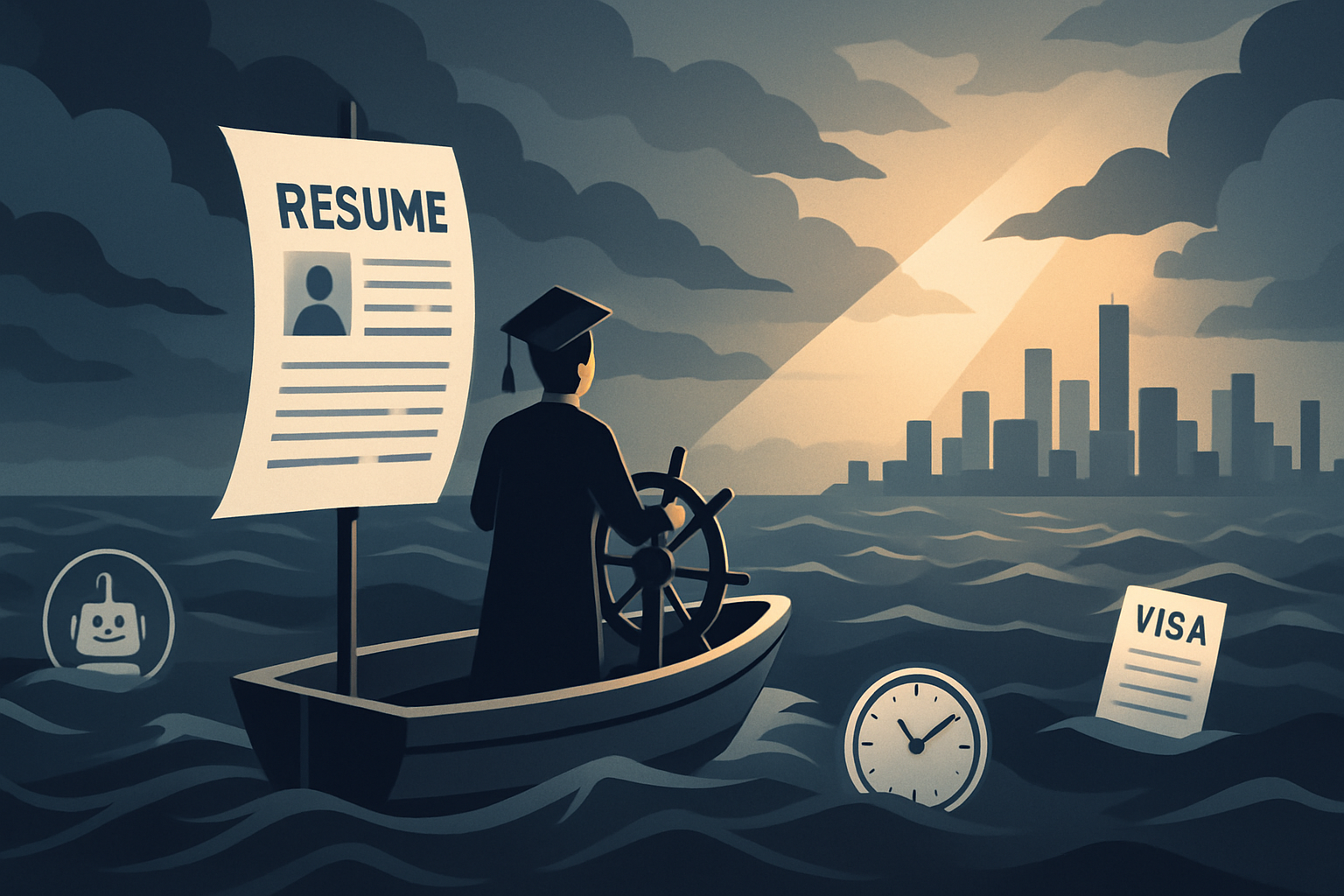
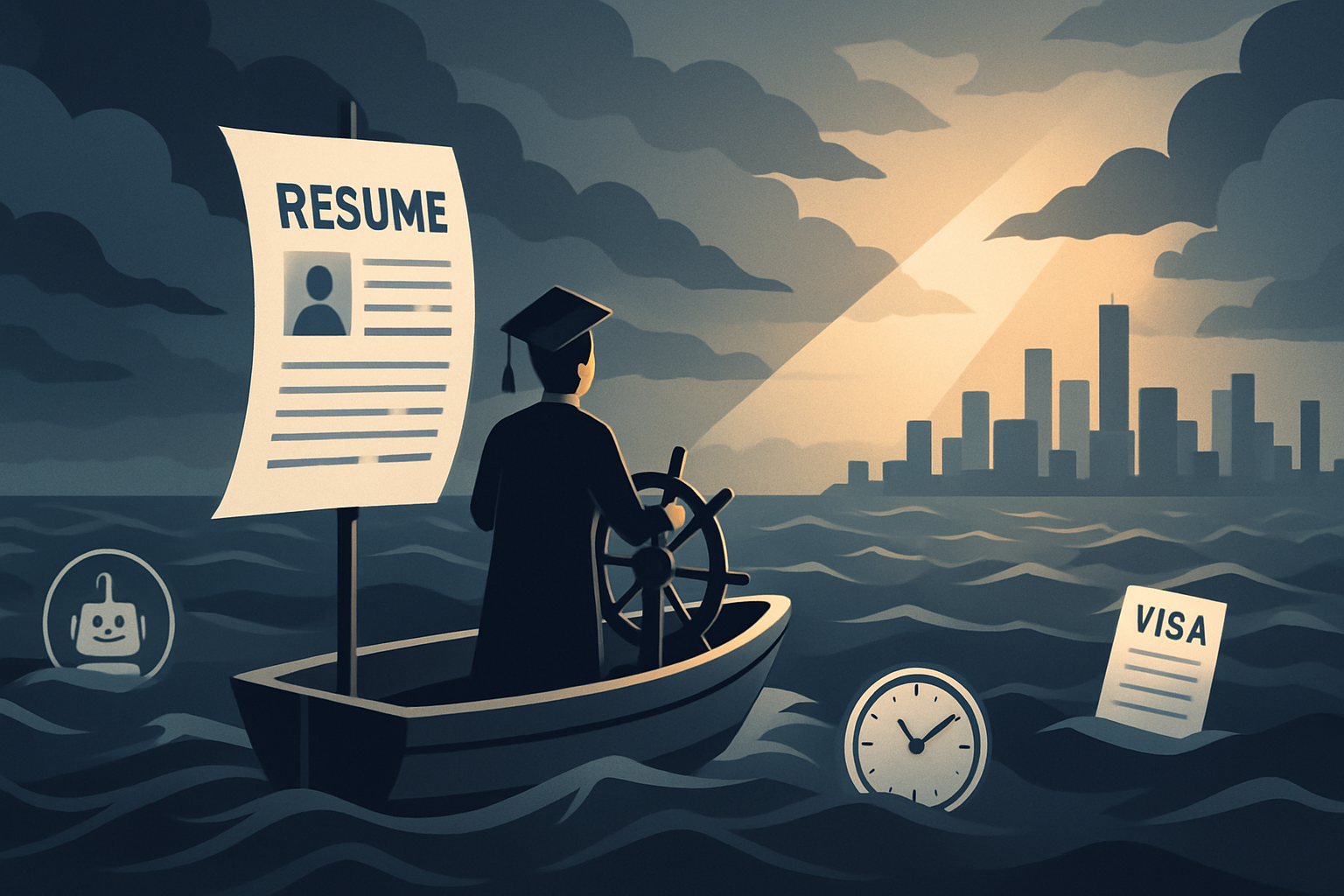
Notes From A Journey: Chapter 2 - A Professional Odyssey
In the previous chapter, I reflected on arriving in the U.S. and the realities of academic life as an international student. In this chapter, I turn the spotlight to the professional journey – a path filled with uncertainty, competition, and some hard-earned lessons.
🏃♂️🏁The Internship Race Begins
The first real step in your professional life often begins with the search for a summer internship. This typically happens during your CPT (Curricular Practical Training) phase, midway through your program. Once you graduate, you enter the OPT (Optional Practical Training) period, a 12-month work authorization granted to F-1 visa holders. If you are in a STEM-designated program, you are eligible for an additional 24-month extension under STEM-OPT.
Until a few years ago, the typical trajectory seemed straightforward: land an internship, convert it into a full-time role, apply for an H-1B visa, and life was set. But that dream has long since unraveled. Frankly, I am not sure it was ever that simple.
Please let go of the illusion that internships are easy to secure. You might hear about people landing one within weeks, or you may even be one of them – but that is not the norm. American companies are not waiting with open arms. Internships are vanishing fast, and you must act even faster. A lot rides on timing, preparation, and frankly, luck.
Let me give you an example. There are hundreds of thousands of people who take up cricket professionally, yet there is only one Sachin Tendulkar, one Anil Kumble, one MS Dhoni. Some of the others might even be more talented, but luck favours a few. That is not to say hard work, skill, and talent don’t matter, of course they do! Look at Vinod Kambli: he entered at the same time as Sachin, but while one is worshipped as the God of Cricket, the other is… well, not remembered as much. This may not be a perfect analogy, but the point remains – you need luck to get through, and hard work, skill, and talent to stay there.
🧾🖥️The Rise of the Resume Robots
If you are starting in the fall semester, you need to begin applying almost as soon as you land. Companies like Goldman Sachs close applications for the next year’s internships by June or July of the current year. It is intense.
Your first major challenge? Building an ATS-friendly resume. The Applicant Tracking System is a gatekeeper that screens your resume based on keywords. Only the resumes that match a certain algorithmic threshold even make it to a human.
You are now in a keyword race. Your achievements take a backseat to algorithmic compatibility.
People try every trick in the book to bypass the ATS. But be warned: HR professionals know these tactics. Each job requires a tailored resume. Even roles within the same company might need distinct versions. It is exhausting, time-consuming, and feels like shooting arrows into the void.
Your university will likely offer ATS-friendly resume templates during orientation or career sessions. Use them. My own resume went through countless iterations. I rewrote it at least 30 times (excluding sub-variations), tailoring each line for different industries, roles, and systems. And still, 95% of my applications were met with silence.
🎲🙏Luck, Timing, and a Last-Minute Break
Just as I was bracing for a summer without an internship, I got a call from Newmark two days before my deadline. I soon joined them as a product development intern. A huge break after months of silence, rejections, and uncertainty. You are also going to face another challenge here, that of not receiving a return offer upon completion of your internship. Another aspect which is dependent on your luck.
Also, remember: you cannot start an internship from day one. You must complete two full-time semesters before you are CPT-eligible. And many employers shy away from CPT altogether. The paperwork is light, but the perceived burden keeps companies away. That is another tough lesson.
📈🚀From Internship to Full-Time: A Different Beast
As graduation nears, you enter the job market. If you thought finding an internship was brutal, wait until you try landing a full-time job. Since mid-2022, the U.S. job market has been merciless. We all hope for a rebound, but that could take time.
Forget what you know about job hunts from your home country. In the U.S., what works for someone else may not work for you. Stay flexible. Adjust your strategy often. And never assume that your talent or GPA guarantees anything.
Luck matters. More than it should.
📬🔗Connections Over Cold Clicks
The American job market runs on connections. It is not just about what you know, it is about who you know. Referrals are golden. Cold applications rarely yield results, but a warm introduction can get your resume directly onto a hiring manager’s desk.
Colleges may help a little (career fairs, workshops, newsletters), but the real work is on you. I attended every networking event I could. I collected business cards, messaged alumni, joined LinkedIn groups, cold-emailed professionals, and tried to get into rooms where things happened.
Still, a referral is not a guarantee. Unless your referee walks your application to the hiring manager and nudges them to call you, nothing is promised.
🎭👻Interviews, Ghosting, and the Grind
Interview experiences varied wildly. Some were warm and encouraging, others cold and transactional. HR responses ranged from ghosting to gold, sometimes from the same company.
Each interview was a lesson. I learned how to "sell myself" without sounding arrogant. I learned to ask better questions, to evaluate company culture, and yes, how to negotiate salary (a cultural leap in itself).
For context: I gave about 30 interviews over 18 months, and submitted over 3,500 applications. Every small win often came down to timing and luck. Rejections feel personal, even though they are not. They are simply statistical.
🧳🛂The Immigration Treadmill
Nothing quite prepares you for the stress of U.S. immigration. The H-1B lottery casts a shadow over every decision. OPT gives you temporary breathing room, but it doesn’t erase the pressure.
You are constantly thinking: Will I get a job in time? Will they sponsor my visa? Will I make the lottery? These questions affect your housing, your finances, even your mental health. And the number of companies willing to sponsor? That list is shrinking fast.
💭⚖️The Hidden Cost: Mental and Emotional Strain
The hardest part of the job hunt is not professional – it is deeply personal. Friends start celebrating or commiserating based on job offers, creating invisible hierarchies. I have seen friendships strain, relationships end, and people enroll in new degrees just to stay in the country. They take on debt. They lose time. All in pursuit of a dream that seems to move further away the closer you get.
The professional journey is not linear. It is not fair. And it is not always kind. But it teaches you resilience, adaptability, and humility in ways no classroom ever could.