
The New Chip Wars: GPUs, ASICs & the Battle for AI Hardware
Contents
TL;DR: The days of Nvidia’s total monopoly are fading. The future of AI hardware is splitting into three distinct lanes: GPUs (for massive training), ASICs (custom chips for efficient cloud inference), and NPUs (for privacy-focused AI on your phone). This shift isn't just technical. It's geopolitical, with India and the US racing to secure supply chains away from a single point of failure in Taiwan.
The Hidden Engine Behind AI
Artificial intelligence may be advancing at breakneck speed, but behind every breakthrough model lies an equally important story: the explosive evolution of the chips that power them. Over the past year, the AI hardware landscape has shifted dramatically. What was once Nvidia’s uncontested domain is now a crowded, rapidly diversifying ecosystem of GPUs, custom ASICs, and NPUs designed for edge computing.
The future of AI isn't just about raw power anymore. It’s about efficiency, cost, and location. Will workloads run inside a massive cloud data center, or right in the palm of your hand? The “one-size-fits-all” era is over, and if you have ever wondered what all these chip names actually mean (Blackwell, TPU, Trainium, Gaudi, MTIA), well, that’s what this article is here for.
The Three Pillars of AI Silicon
Today’s AI hardware ecosystem revolves around three categories of chips, each optimized for different phases of the AI workflow: training, inference, and on-device computing.
- GPUs – The Versatile Workhorses
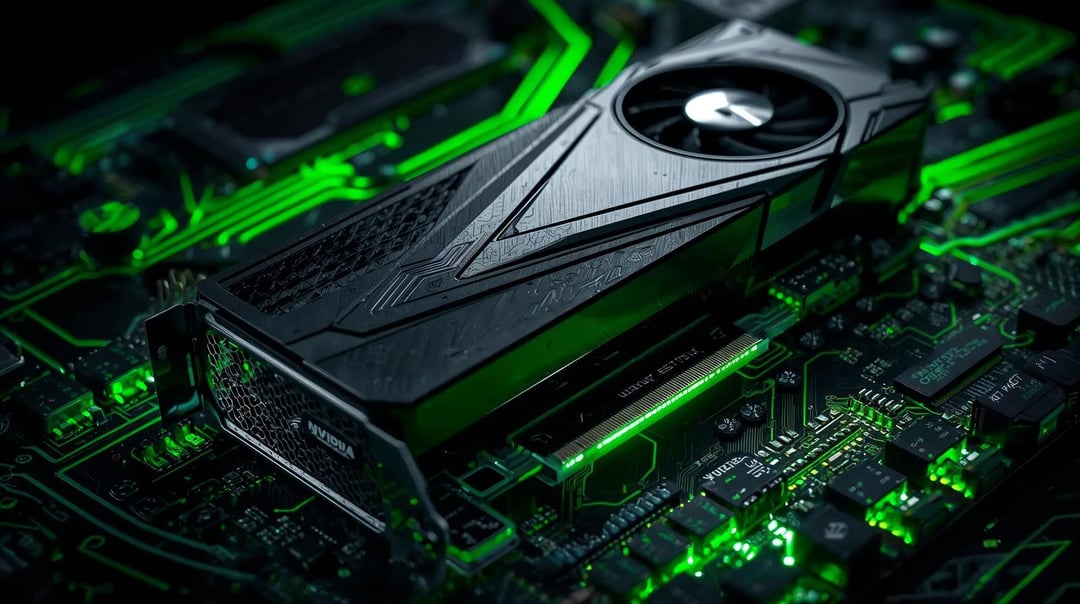
Originally designed for graphics rendering in video games, GPUs excel at parallel computation, making them ideal for training large neural networks. Nvidia’s Blackwell architecture represents the current high watermark, while CUDA, its proprietary software ecosystem, remains the lingua franca for AI developers.
AMD’s Instinct line, built on the ROCm open-source stack, is becoming a stronger competitor, especially as demand continues to far exceed supply.
Core Advantage: Flexibility. GPUs are the universal starting point of AI compute, supporting training, inference, simulation, and a wide variety of workloads.
- ASICs – Precision Silicon Built for the Cloud
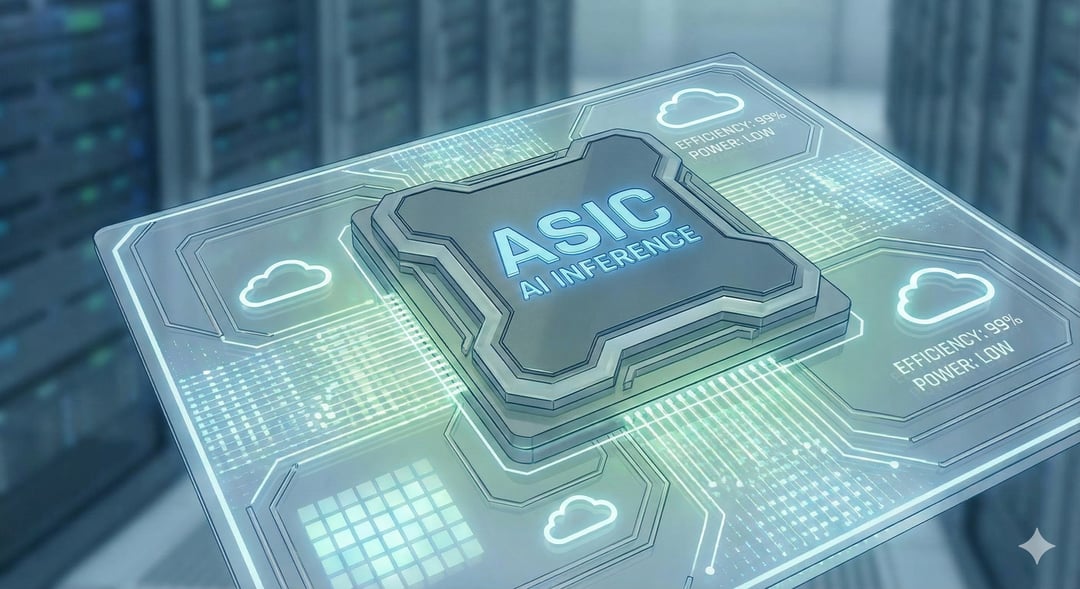
As AI shifts from training to real-world usage (inference), cost and energy efficiency become critical. Using a $40,000 GPU to answer a simple chatbot question is like using a rocket engine to deliver a pizza. Enter ASICs (Application-Specific Integrated Circuits), which are chips hardwired for one task. If a GPU is a Swiss Army Knife, an ASIC is a laser-guided surgical scalpel.
The massive hyperscalers (Google, Amazon, Microsoft, Meta and other companies with massive compute power) now see custom ASICs as essential to reducing Nvidia dependency and the colossal electricity bills behind AI infrastructure.
- Google (TPU/Trillium): The pioneer. Powers Google’s internal AI and Anthropic’s Claude.
- Amazon (Trainium & Inferentia): Delivers massive price-performance gains for AWS clients.
- Microsoft (Maia): The backbone of the new Azure AI infrastructure.
- Meta (MTIA): Optimized specifically for Facebook and Instagram recommendation engines.
Broadcom and Marvell assist in designing custom silicon (though they don’t manufacture it).
- NPUs – Bringing AI to the Edge
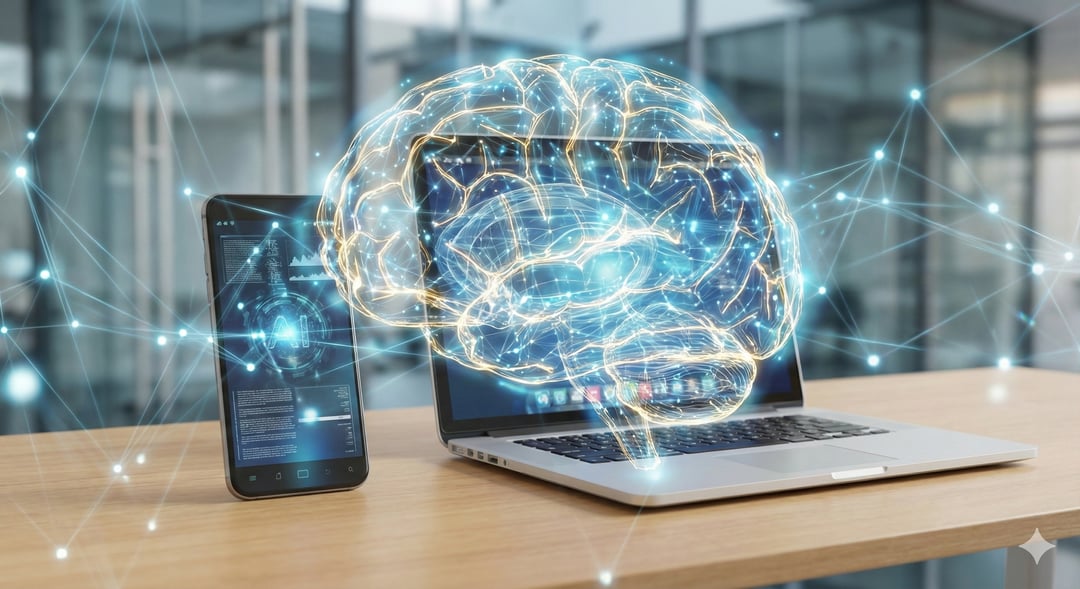
The final frontier of AI hardware isn’t in massive data centers — it’s in your pocket. Neural Processing Units (NPUs) run AI locally on devices rather than depending on remote servers, improving speed, privacy, and independence from connectivity.
Examples:
- Qualcomm Snapdragon NPUs enable real-time translation & filtering
- Apple Neural Engine powers Face ID, Siri, and on-device AI editing
- Intel Core Ultra / AMD laptops are powering the new wave of AI PCs
NPUs democratize AI, putting sophisticated capabilities everywhere.
Innovation Wildcards
It’s not just Big Tech who are making solid strides in this space. A few startups are pushing boundaries further:
- Cerebras builds wafer-scale processors, using an entire silicon wafer as a single chip.
- Groq introduced LPU (Language Processing Unit) delivering ultra-fast inference speeds.
These remind us that the hardware race is nowhere near finished and that it is an open field for anyone who has the vision and strength.
The Geopolitics of Silicon: Why Location Matters
This is where another angle of reality hits us all. Global AI progress depends not just on chip design, but on where chips are manufactured, and by whom.
Taiwanese Tension
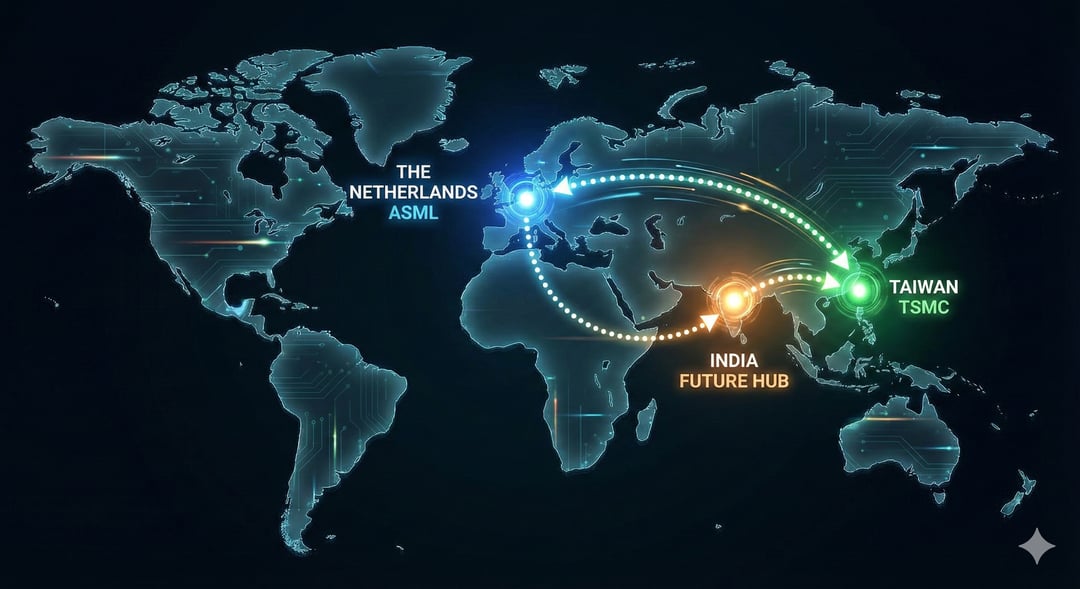
Regardless of who designs the chip, nearly all advanced AI silicon is manufactured by one company in one location: TSMC in Taiwan. This concentration creates extraordinary technological efficiency but massive strategic vulnerability.
Dutch Dependency
You can't make chips without the machines that print them. ASML, based in the Netherlands, holds the monopoly on the EUV lithography machines required to make advanced processors. They are the gatekeepers of the atomic scale.
Indian Ingenuity
Encouragingly, the supply chain is diversifying. In 2025, ASML signaled strong interest in India’s semiconductor mission, announcing a support office in GIFT City (Gujarat) to align with new fab projects like the Tata Electronics plant in Dholera.
Combined with subsidies, infrastructure investment, and partnerships with Lam Research, Merck and others, India is building an end-to-end semiconductor value chain including design, lithography, fabrication, and packaging. If successful, India could reduce global dependency risk and become a major node in a diversified AI supply chain.
The Energy Equation
We cannot talk about chips without talking about heat. The efficiency gains from ASICs aren't just about saving money, but are also an environmental imperative.
As models grow, power availability is becoming the hard ceiling for AI scaling. The shift from power-hungry GPUs to efficient ASICs and low-power NPUs is the only way the industry can sustain its growth without melting the grid. Hence the high quantum investments in nuclear energy. Residents near data centers are already complaining about a 40 – 60% increase in their electricity bills, as these data centers draw more power from the grids.
Conclusion: The Era of Choice
The diversification of AI hardware signals a maturing industry. The era of GPUs everywhere is giving way to workload-specific architecture. And the real strategic race is shifting from software superiority to silicon control.
Key questions for companies
1. Are you training models or running inference?2. Cloud or edge?
3. Maximum flexibility or maximum efficiency?
The AI revolution is ultimately a chip revolution and the next breakthrough may completely redraw the map.